Fifth-generation wireless technology is transforming how New Zealanders connect, communicate, and conduct business. As 5G networks expand across the country, they bring unprecedented speeds, ultra-low latency, and the capacity to support millions of connected devices simultaneously. This technological advancement represents more than just faster internet – it’s the foundation for smart cities, autonomous vehicles, remote surgery, and industrial automation that will reshape New Zealand’s economic landscape.
The rollout of 5G infrastructure has gained significant momentum throughout 2024, with major telecommunications providers investing heavily in network expansion. Coverage now extends beyond Auckland and Wellington to include Christchurch, Hamilton, Tauranga, and numerous regional centres. This expansion signals a commitment to ensuring rural and urban communities alike can access next-generation connectivity, addressing the digital divide that has historically separated metropolitan and provincial areas.
5G networks deliver theoretical speeds up to 100 times faster than 4G, with real-world performance typically ranging from 150 Mbps to over 1 Gbps in optimal conditions. In practical terms, this means downloading a full-length HD movie takes seconds rather than minutes, while video conferencing becomes seamless even with multiple participants in 4K resolution. The reduced latency – often less than 10 milliseconds – enables near-instantaneous response times crucial for applications like remote robotics and virtual reality.
Network slicing technology allows providers to create dedicated virtual networks tailored for specific applications. Emergency services can access prioritised bandwidth during critical situations, while industrial operations receive guaranteed performance for automated systems. This flexibility ensures that mission-critical applications maintain optimal performance regardless of network congestion from consumer traffic.
Edge computing integration brings data processing closer to end users, reducing the need to send information to distant servers. This architecture improves performance for latency-sensitive applications while reducing bandwidth costs for telecommunications providers. Local data processing also enhances privacy and security by keeping sensitive information within New Zealand’s borders.
Manufacturing facilities across New Zealand are beginning to implement 5G-enabled Industry 4.0 solutions that connect machinery, sensors, and control systems in real-time. These smart factories can adjust production parameters instantly based on demand fluctuations, quality metrics, and supply chain disruptions. Predictive maintenance systems monitor equipment health continuously, reducing downtime and extending machinery lifespan through data-driven insights.
The healthcare sector stands to benefit enormously from 5G connectivity. Remote patient monitoring devices can transmit vital signs continuously to medical professionals, enabling early intervention for chronic conditions. Telemedicine consultations become more effective with high-definition video and real-time data sharing, particularly valuable for rural communities with limited access to specialists. Advanced applications like remote surgery assistance and augmented reality medical training become feasible with 5G’s low latency requirements.
Agriculture technology companies are developing precision farming solutions that rely on 5G networks to coordinate autonomous tractors, drones, and sensor networks across vast rural properties. These systems optimise irrigation, fertiliser application, and harvesting schedules based on real-time soil conditions, weather patterns, and crop health monitoring. The result is increased yields, reduced environmental impact, and lower operational costs for farming operations.
Transportation infrastructure benefits from 5G through intelligent traffic management systems that communicate with connected vehicles to optimise traffic flow and reduce congestion. Smart traffic lights adjust timing based on real-time vehicle counts, while connected vehicle systems provide drivers with instant updates about road conditions, accidents, and optimal routing. The NZTA has expressed interest in these technologies for improving road safety and efficiency across the national highway network.
New Zealand cities are exploring smart city initiatives powered by 5G connectivity that integrate various municipal services through interconnected sensor networks. Smart streetlights adjust brightness based on pedestrian and vehicle traffic while monitoring air quality and noise levels. Waste management systems alert collection crews when bins reach capacity, optimising routes and reducing unnecessary truck movements through residential areas.
Environmental monitoring networks track water quality in harbours and rivers, providing real-time data to help protect marine ecosystems and ensure safe recreational activities. Weather stations distributed throughout urban areas collect hyperlocal climate data that improves forecasting accuracy and helps city planners prepare for extreme weather events.
Public safety applications include emergency response coordination systems that automatically dispatch the nearest available resources based on incident type and severity. Surveillance networks enhanced with artificial intelligence can detect suspicious behaviour or identify missing persons, while maintaining privacy through anonymisation technologies and strict data governance protocols.
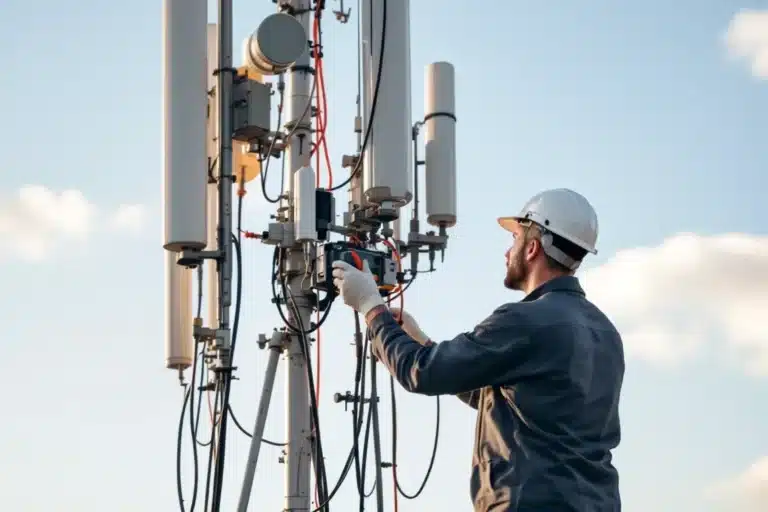
Deploying 5G networks requires significantly more infrastructure than previous generations due to shorter signal range and higher frequency requirements. Small cell installations must be positioned every few hundred metres in dense urban areas, necessitating negotiations with property owners and local councils for installation sites. The aesthetic impact of additional telecommunications equipment has sparked community discussions about balancing technological progress with visual amenity.
Power consumption represents another significant challenge, as 5G base stations require substantially more electricity than 4G equivalents. Telecommunications companies are investing in renewable energy solutions and energy-efficient equipment to mitigate environmental impacts while managing operational costs. Battery backup systems ensure network resilience during power outages, particularly important for emergency communications.
Spectrum allocation and management require careful coordination to prevent interference between different services and operators. The radio frequency spectrum suitable for 5G is limited, making efficient use crucial for maximising network capacity and performance. International coordination ensures that New Zealand’s 5G networks remain compatible with global standards and devices.
Cybersecurity considerations become more complex with 5G due to the increased number of connected devices and potential attack vectors. Network operators must implement robust security measures including encryption, authentication protocols, and continuous monitoring systems. The distributed nature of 5G infrastructure requires security measures at multiple levels, from individual devices to core network components.

The economic impact of 5G extends far beyond telecommunications, creating opportunities for software developers, hardware manufacturers, and service providers across multiple industries. Start-up companies are developing innovative applications that take advantage of 5G capabilities, from augmented reality marketing platforms to industrial monitoring solutions. The technology sector’s growth contributes to job creation and export opportunities as New Zealand companies compete in global markets.
Research and development partnerships between universities, technology companies, and government agencies accelerate innovation in 5G applications. These collaborations focus on solving uniquely New Zealand challenges while developing intellectual property that can be commercialised internationally. Areas of particular interest include agricultural technology, renewable energy integration, and tourism applications that showcase the country’s natural attractions through immersive experiences.
Digital inclusion initiatives ensure that 5G benefits reach all New Zealanders, regardless of location or economic circumstances. Government programmes support infrastructure development in underserved areas while providing digital literacy training to help communities take advantage of new technologies. These efforts recognise that the full economic potential of 5G can only be realised when all citizens have access to high-speed connectivity.
Autonomous vehicle deployment depends heavily on 5G infrastructure for vehicle-to-infrastructure communication and real-time decision making. Connected cars will communicate with traffic signals, road sensors, and other vehicles to navigate safely and efficiently. This technology promises to reduce traffic accidents, improve fuel efficiency, and provide mobility solutions for elderly and disabled citizens who cannot operate conventional vehicles.
Virtual and augmented reality applications become practical for everyday use with 5G’s low latency and high bandwidth capabilities. Educational institutions can offer immersive learning experiences that transport students to historical sites or inside molecular structures. Retail businesses provide virtual try-on experiences for clothing and furniture, while real estate agents offer comprehensive property tours without requiring physical visits.
Environmental monitoring and conservation efforts benefit from 5G-enabled sensor networks that track wildlife movements, monitor forest health, and detect illegal activities in protected areas. These systems provide conservationists with real-time data to make informed decisions about resource allocation and intervention strategies. Marine monitoring applications track fish populations and water quality in coastal areas, supporting sustainable fishing practices and ecosystem protection.
5G technology represents a fundamental shift in how New Zealanders will work, learn, and interact with their environment. As network coverage expands and applications mature, the full potential of this technology will become apparent across industries and communities. The successful deployment of 5G infrastructure positions New Zealand as a leader in digital innovation while creating economic opportunities that extend far beyond the telecommunications sector. The coming years will see continued investment in network expansion, application development, and digital skills training that ensures all Kiwis can participate in the 5G-enabled future.
This article is brought to you by Cutting Club. We combine cutting-edge insights and expertise from across various fields to deliver valuable, engaging content. Hungry for more? Explore our latest posts and stay informed with the best in SEO & Digital Marketing, Tech & Innovation, Health & Wellness, Finance & Investment, Lifestyle & Fashion, and Real Estate Insights!