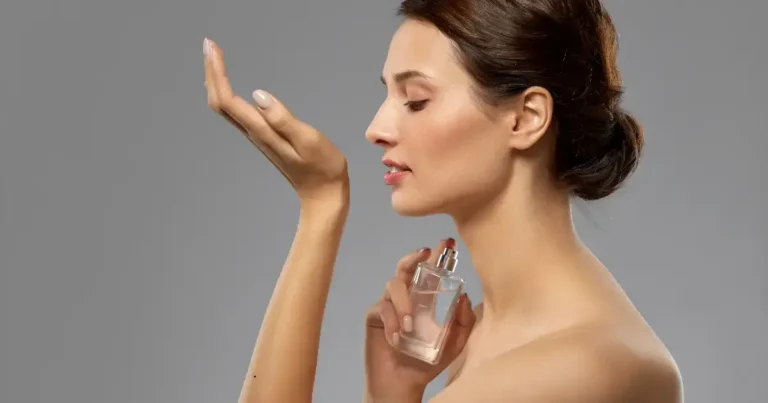
The subtle kiss of jasmine on your skin. The warm embrace of amber lingering in the air. The fleeting whisper of citrus that transports you to sun-drenched Mediterranean orchards. Perfume is more than just a pleasant scent—it’s an invisible accessory that speaks volumes about who we are and how we wish to be perceived.
As Shakespeare once wrote, “Purple the sails, and so perfumed, that the winds were love-sick with them.” Indeed, the use of perfume has long been associated with mystery, fantasy and imagination—we wear perfume to please others, to leave a good impression, and to surround ourselves with a pleasing, lingering scent.
The story of perfume is as old as human civilisation itself. The word “perfume” comes from the Latin “per fumum,” meaning “through smoke,” reflecting its earliest forms as incense burned for religious rituals. The art of perfume-making originated in ancient Egypt, Mesopotamia, the Indus Valley, and China before being refined by the Romans and early Arab and Persian pharmacists who developed crucial techniques like distillation.
Archaeological evidence from Cyprus reveals what may be the world’s first perfumery, built on an industrial scale around 4000 BCE, covering approximately one square kilometre—proof that fragrances were already in high demand during this period. These early fragrances weren’t merely for personal adornment; they served important religious and medicinal purposes.
One of the earliest recorded perfume makers was a woman named Tapputi, an overseer of the Mesopotamian Royal Palace. Her techniques for making perfumes were discovered on a clay tablet believed to date back to 1200 BCE, making her not only the world’s first documented perfumer but also the first chemist.
As trade routes expanded and cultures intermingled, perfumery techniques evolved. Islamic cultures contributed significantly to perfumery development in two major areas—refining extraction techniques through steam distillation and introducing new raw materials. Both innovations greatly influenced Western perfumery and scientific developments.
The Renaissance period saw perfume become firmly established in European court life. In France, perfumes were primarily used by royalty and the wealthy to mask body odours resulting from the sanitary practices of the day. This patronage helped create the Western perfumery industry.
By the 18th century, the town of Grasse in southern France had become the perfume capital of the world—a title it still holds today. The cultivation of flowers for their perfume essence, which had begun in the 14th century, grew into a major industry in this region.
Modern perfumery as we know it began taking shape in the late 19th century. The commercial synthesis of aroma compounds such as vanillin and coumarin allowed for the creation of perfumes with scents previously unattainable solely from natural sources. This intersection of artistry and chemistry opened up endless possibilities for fragrance creation.
Creating a perfume is a delicate balancing act of art and chemistry. The first stage in making a perfume is extracting fragrant essential oils from plants. While many methods exist, distillation remains the most common technique.
In steam distillation, plant materials are placed in boiling water, releasing essential oils that evaporate with the steam. Once condensed, the oil separates from the water and can be collected. This process is incredibly resource-intensive—thousands of kilos of flowers may be needed to obtain just one kilo of essential oil, which partly explains why many perfumes command premium prices.
These precious oils are then diluted with alcohol, which serves both as a carrier and a fixative, giving fragrances their long-lasting quality by delaying evaporation. The diluted solution steeps in special containers before being cooled to allow any resins or waxy particles to settle.
Today’s perfumers work with both natural and synthetic ingredients. Plants remain the largest source of fragrant compounds, with different parts yielding various scents—flowers, barks, leaves, fruits, roots, and resins all contribute unique aromatic profiles to the perfumer’s palette.
Many modern perfumes also contain synthesised odorants that can provide fragrances not found in nature. For instance, Calone, a synthetic compound, imparts a fresh, ozonous, metallic marine scent widely used in contemporary perfumes.
Perfumes are categorised into fragrance families based on their dominant characteristics. The main families include Floral, Oriental, Woody, Aromatic Fougère, and Fresh, each with its own subgroups. These classifications help consumers navigate the vast world of scents and find fragrances that appeal to their preferences.
Floral fragrances, as the name suggests, feature flower notes like rose, jasmine, and lily of the valley. Oriental perfumes are typified by warm, exotic notes such as vanilla, amber, and spices. Woody scents incorporate materials like sandalwood, cedar, and vetiver. Fougère fragrances (meaning “fern-like”) typically combine lavender, oakmoss, and coumarin, while Fresh scents often feature citrus, aquatic, or green notes.
Understanding the structure of a perfume is also essential. Each fragrance has three sets of notes that unfold over time:
This temporal nature of perfume is what creates its evolving story on your skin—a fragrant journey that unfolds uniquely with your personal chemistry.
Perfume is more than just something you spray on before leaving the house—it’s an extension of your personality and a powerful tool for making memories. The conventional application of pure perfume in Western cultures is behind the ears, at the nape of the neck, under the armpits, and at the insides of wrists, elbows, and knees. These pulse points warm the perfume and release fragrance continuously.
Perfumer Sophia Grojsman suggests that behind the knees is the ideal spot to apply perfume, allowing the scent to rise naturally. However, personal preference and the specific fragrance should guide your application technique.
Understanding perfume concentration is also important when selecting and wearing fragrances:
The higher the concentration, the less you need to apply and the longer the scent will last on your skin.
While historically dominated by European houses, the perfume industry is seeing exciting developments around the world, including here in New Zealand. The New Zealand perfume industry is just emerging with only a handful of local perfumers, but those shaping the scene see enormous potential in a country brimming with artisanal producers.
New Zealand’s rich and complex urban identities inform its creative output, with several strands evident in the work of new perfumers—a deep respect for indigenous culture, contrasting old with new, and embracing complexity.
Local brands are carving out their own niche, often drawing inspiration from New Zealand’s unique natural environment. Pacific Perfumes, for example, creates fragrances reflecting the essence of Aotearoa and the Pacific, offering solid perfumes, roll-on perfume oils, body oils, and sensational soaps—all made in New Zealand.
Curionoir is another standout—a Māori-owned fragrance brand based in Aotearoa, New Zealand. Founder Tiffany Witehira draws on her own past to respond to the rich history of perfumery, creating sensory experiences that trigger memories using the traditions of past relatives.
Abel, founded by a former winemaker, makes forward-thinking, 100% natural fragrances without harsh petrochemicals. With minimal new launches, Abel’s range is a considered edit of genderless scents inspired by nature: think salty ocean swims, crisp green woods, and the stillness after summer rain.
The growth of these local perfumers reflects a broader trend toward artisanal, thoughtfully created products with authentic stories behind them. It’s an exciting time for fragrance enthusiasts in New Zealand as our local industry blossoms with its own distinctive character.
As we look to the future, the perfume industry continues to evolve with changing consumer preferences and technological advancements. Sustainability has become a significant focus, with more brands seeking eco-friendly ingredients and packaging. The concept of gender-neutral fragrances is also gaining momentum, challenging traditional marketing divisions between “masculine” and “feminine” scents.
Digital technology is transforming how we discover and experience perfume, with online platforms offering sophisticated algorithms to help consumers find their perfect scent match. Some companies are even experimenting with technologies that could one day allow us to smell fragrances through our devices—potentially revolutionising how we shop for perfume.
Despite these innovations, the fundamental appeal of perfume remains unchanged: its extraordinary ability to evoke emotions, trigger memories, and express our innermost selves. In an increasingly digital world, the sensory experience of fragrance offers a tangible connection to pleasure and beauty that remains as relevant today as it was thousands of years ago.
Whether you’re a fragrance aficionado with a carefully curated collection or someone who reaches for the same trusted bottle year after year, perfume continues to weave its invisible magic through our lives—an olfactory art form that enhances our experience of the world one breath at a time.

This article is brought to you by Cutting Club. We combine cutting-edge insights and expertise across various fields to bring you valuable and engaging content. Hungry for more? Explore our latest posts and stay informed with the best in SEO & Digital Marketing, Tech & Innovation, Health & Wellness, Finance & Investment, Lifestyle & Fashion, and Real Estate Insights!